
Walking into a car dealership often feels like entering a high-stakes poker game where the other players already know your hand. The tension is palpable, the jargon is confusing, and the pressure to sign on the dotted line is relentless. However, the most expensive mistake a buyer can make happens before they even look at a credit application: failing to separate the price of the car from the terms of the financing.
In 2026, dealerships have become masters at “payment selling.” They want to focus entirely on what you can afford per month, which allows them to hide the true cost of the vehicle, high interest rates, and unnecessary add-ons. To be a smart buyer, you must master the art of negotiating the “out-the-door” price first.
Here is your comprehensive guide to taking control of the negotiation process and ensuring you get the best possible deal before you ever discuss a monthly payment.
The Golden Rule: Negotiate the “Out-the-Door” Price
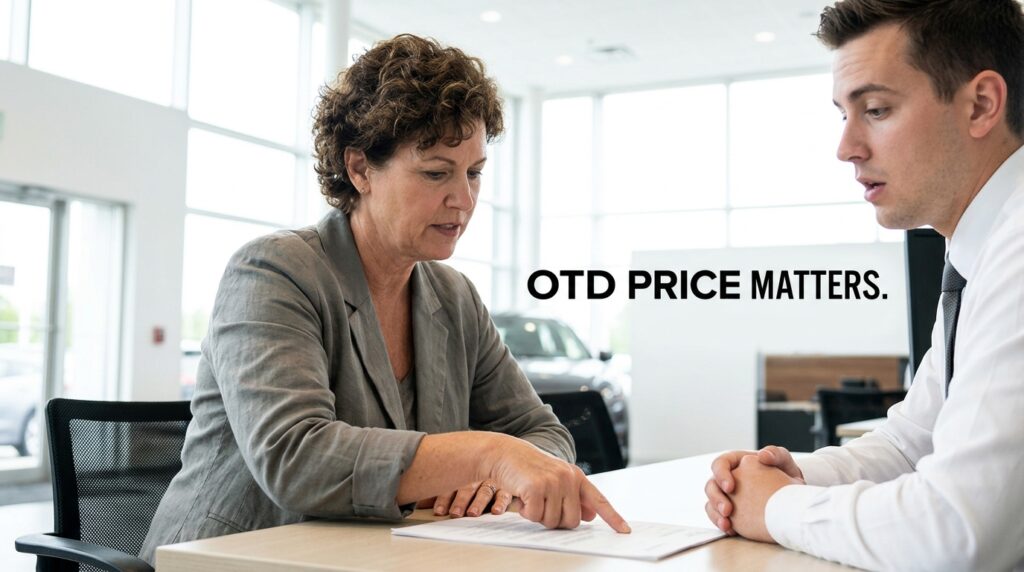
The “Out-the-Door” (OTD) price is the only number that truly matters. It includes the agreed-upon price of the car, taxes, registration fees, and any dealer documentation fees. Dealers love to focus on the “MSRP” or the “Monthly Payment” because those numbers are malleable and easy to manipulate.
When you walk in, make it clear that you are a “price buyer,” not a “payment buyer.” If a salesperson asks, “What monthly payment are you looking for?”, your response should be: “I’m not worried about the payment yet. I want to agree on the total purchase price of the vehicle first.”
By sticking to the OTD price, you prevent the dealer from stretching out a loan to 84 months just to hit your “target payment” while secretly charging you thousands more for the car itself.
Knowledge is Your Greatest Leverage
In the digital age, walking into a dealership without data is like going to a knife fight empty-handed. Before you set foot on the lot, you need to know three specific numbers for the exact trim and model you want.
1. The Invoice Price vs. MSRP
The MSRP (Manufacturer’s Suggested Retail Price) is just that—a suggestion. The Invoice Price is what the dealer theoretically paid the manufacturer for the car. While “dealer holdbacks” mean they still make a profit even at invoice, knowing this number gives you a baseline for where their “wiggle room” begins.
2. Market Value (The “Fair Purchase Price”)
Use tools like Kelley Blue Book, Edmunds, or local inventory listings to see what people in your specific zip code are actually paying. If the average buyer is getting $2,000 off the sticker price, you should aim for at least that much—or better.
3. Your Trade-In’s True Worth
If you have a trade-in, keep it out of the negotiation until the very end. Get a written quote from a third-party buyer (like Carvana or a local competitor) first. This acts as your “floor.” If the dealer offers you less, you already have a guaranteed backup plan.
The Art of the “Silent” Negotiation
Most people think negotiating is about being loud or aggressive. In reality, the best negotiators are the ones who speak the least. Dealers use “the silence” to make you uncomfortable, hoping you’ll speak up and offer a higher price just to break the tension.
Flip the script. When you make an offer based on your research, state the number clearly and then stop talking. Let the salesperson be the one to break the silence.
If they come back with a “No,” ask them a simple, open-ended question: “How did you arrive at that number?” This forces them to justify their price with logic rather than emotion, and it usually reveals where their hidden fees are buried.
Beware of the “F&I” (Finance and Insurance) Room Pitfalls
Negotiating the price of the car is only half the battle. The second half happens in the Finance and Insurance office. This is where the dealership makes the majority of its profit by selling products you probably don’t need.
The “Protection” Add-Ons
Once the price is settled, the F&I manager will present a menu of options: extended warranties, gap insurance, paint protection, and tire-and-wheel coverage. These are often marked up by 200% or 300%.
If you want an extended warranty, research third-party options before you arrive. If you need Gap Insurance, check with your auto insurance provider first—it’s usually a fraction of the cost. By saying “no” to these add-ons, you protect the low price you worked so hard to negotiate.
Dealer Documentation Fees
Almost every dealer will charge a “Doc Fee.” In some states, these are capped by law; in others, they can be as high as $900. While most dealers will claim this fee is “non-negotiable,” you can ask them to reduce the price of the car by the equivalent amount to offset the fee.

The Power of “Walking Away”
The most powerful tool in your arsenal is your feet. If the dealer refuses to budge on a price that your research shows is fair, or if they start playing games with the numbers, stand up and leave.
There is a psychological shift that happens when a buyer walks toward the exit. Dealers know that once you leave, the odds of you coming back are less than 10%. Often, the “best and final” offer magically appears right as you’re reaching for the door handle. If it doesn’t, don’t sweat it. There are hundreds of other dealerships, and in 2026, inventory is high enough that you don’t need to settle for a bad deal.
Timing Your Negotiation for Maximum Success
When you negotiate is just as important as how you negotiate. Dealerships are businesses driven by monthly and quarterly cycles.
The End-of-Month Push
Salespeople and managers have quotas to hit. If they are two cars away from a massive manufacturer bonus on the 30th of the month, they will be much more flexible on price than they were on the 5th.
The “Ghost Town” Strategy
Visit the dealership on a Tuesday morning or a rainy weekday. When the showroom is empty, the staff is much more motivated to make a deal just to put a “win” on the board for the day. If you go on a busy Saturday, you are just one of many potential sales, and they will be less likely to spend time haggling with you.
Separate the Trade-In and the Financing
Dealers love to “bundle” the car price, the trade-in value, and the financing rate into one confusing ball of numbers. This is called “the shell game.” They might give you a great price on the new car but “steal” your trade-in by offering $3,000 less than it’s worth. Or they might give you top dollar for your trade-in but hike the interest rate on your loan.
The Solution: Treat these as three completely separate transactions.
-
Negotiate the car price first. Get it in writing.
-
Negotiate the trade-in second. Show them your third-party quotes.
-
Discuss financing last.
By isolating these steps, you ensure that you aren’t being overcharged in one area to make up for a “deal” in another.
Use Competitive Bidding (The Email Method)
If you hate face-to-face confrontation, the “Email Method” is your best friend. Reach out to the Internet Sales Department of 3-4 dealerships within a 50-mile radius. Tell them exactly what model and trim you want and ask for their best “Out-the-Door” price.
Take the lowest quote and send it to the other dealers to see if they can beat it. This creates a “reverse auction” where the dealers are competing for your business, rather than you begging for a deal. By the time you walk into the dealership, the price is already settled, and you’re just there to sign the papers and inspect the car.

Final Thoughts: Stay Calm and Stay Objective
Negotiating a car price is an emotional experience, but you must remain objective. The dealership’s job is to make you fall in love with the car so that you stop caring about the math. Your job is to remember that a car is a depreciating asset—a tool to get you from point A to point B.
If you go in prepared with your research, stay firm on your “Out-the-Door” price, and are willing to walk away from a bad deal, you will always come out on top. Remember, the best “smart car buying” strategy isn’t about winning a fight; it’s about reaching a fair agreement where the math makes sense for your future.
Happy negotiating, and may your next “Out-the-Door” price be exactly where you want it to be!