
The automotive market in 2026 is a digital-first frontier. While technology has made it easier to compare prices and browse inventory from your sofa, it has also opened up a sophisticated new playbook for scammers and predatory sellers. Buying a car is often the second-largest purchase you will ever make, and for a scammer, that makes you a high-value target.
To navigate this landscape without losing your shirt, you need to move past the “trust your gut” mentality. Scammers are professional charmers; they win by making you feel like you’ve found the deal of a lifetime. Being a smart buyer means replacing that emotion with a cold, systematic process designed to smoke out fraud before you ever reach for your wallet.
Here is how you can buy your next vehicle while keeping your money—and your identity—perfectly safe.
The Anatomy of the Modern “Too Good to Be True” Scam
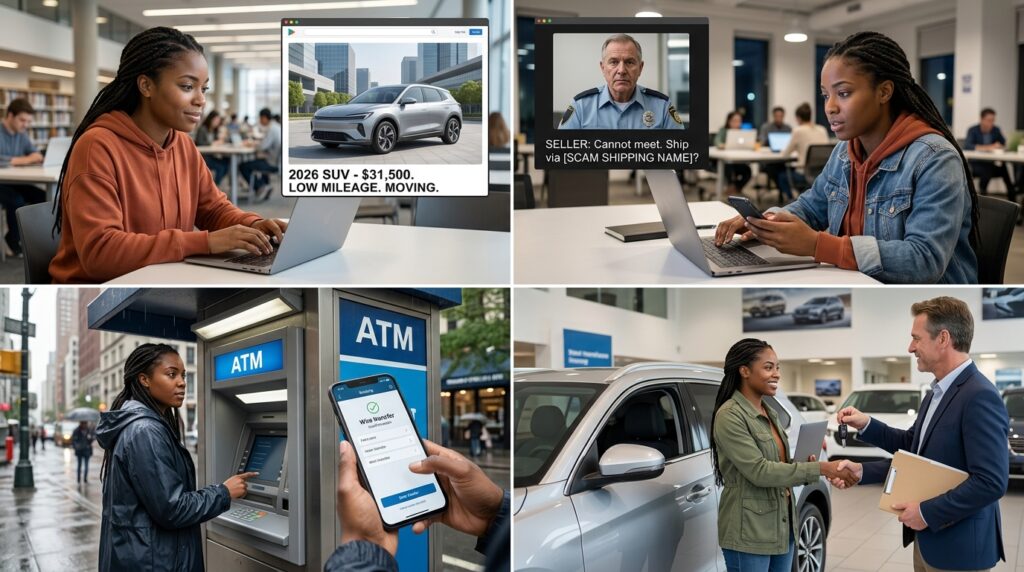
The most common trap in 2026 is the “phantom car” listing. You’ll see a pristine, low-mileage SUV priced about 30% below market value. The seller usually has a convincing story: they’ve been deployed overseas, they are going through an urgent divorce, or they’ve just inherited a car they don’t need.
The red flag isn’t just the price; it’s the urgency and the distance. If a seller refuses to meet in person or insists on using a third-party shipping service that “guarantees” the transaction, walk away. Scammers love to use escrow services that look official but are actually cloned websites designed to steal your wire transfer.
Remember the golden rule of the digital age: If you can’t see the car, touch the car, and verify the VIN in person, do not send a single cent. No “refundable” deposits, no “holding” fees, and certainly no gift cards.
Verifying the Vehicle’s “Digital Fingerprint”
Every car has a story, and in 2026, that story is recorded in several databases. A scammer will often try to sell a car with a “washed title”—a vehicle that was totaled in a flood or a major wreck in one state, then moved to another where the title was surreptitiously cleared.
The VIN Check is Non-Negotiable
Before you even go to see a car, ask for the Vehicle Identification Number (VIN). Run this number through a reputable service like Carfax, AutoCheck, or the National Insurance Crime Bureau’s (NICB) free VinCheck tool.
You are looking for discrepancies. If the listing says 40,000 miles but a service record from two years ago shows 60,000, you are looking at odometer fraud. If the car has been registered in four different states in the last year, it’s likely a “lemon” that a dealer is trying to offload.
Title Verification
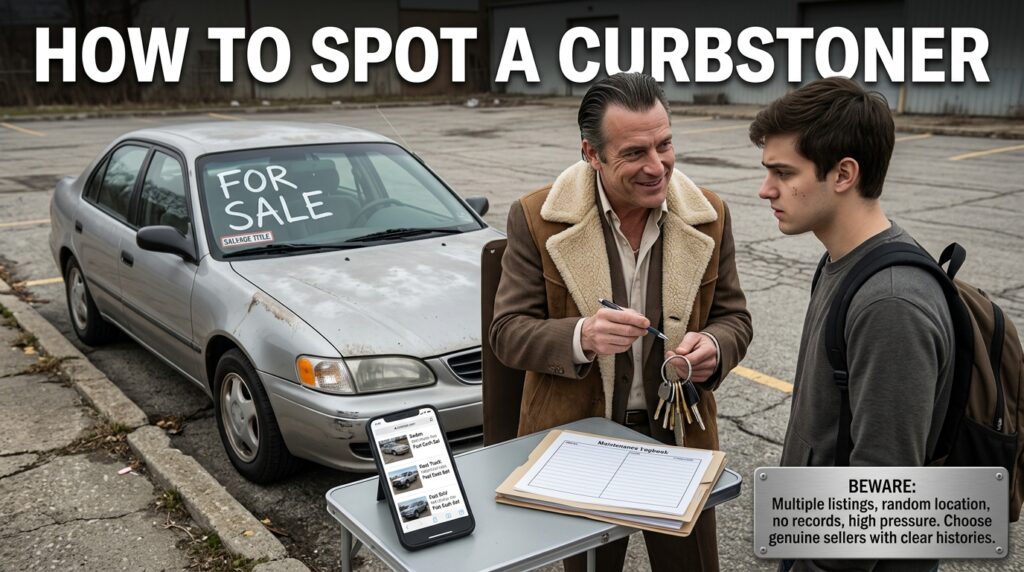
When you meet the seller, ask to see the physical title. Does the name on the title match the seller’s ID? If they are “selling it for a friend,” stop. This is a practice called “curbstoning.” Unlicensed dealers buy junk cars, do cosmetic touch-ups, and sell them as private citizens to avoid consumer protection laws. If the name doesn’t match, the deal doesn’t move forward.
Avoiding the “Hidden” Scams at the Dealership
Scams aren’t limited to shady private sellers on Craigslist. Even legitimate-looking dealerships can engage in “legal” scams—predatory practices that stay just within the lines of the law but aim to drain your bank account.
The “Yo-Yo” Financing Trap
This is one of the most devastating dealership scams. You sign the paperwork, drive the car home, and feel great. A week later, the dealer calls and says, “The financing fell through,” and tells you that you need to come back and sign a new contract with a higher interest rate or a larger down payment.
To avoid this, never leave the lot without “Spot Delivery” paperwork that is final. Better yet, get pre-approved for a loan at your own bank or credit union before you go. When you bring your own financing, the dealer loses the ability to pull the rug out from under you.
The “Add-On” Shell Game
In the excitement of the final signing, the finance manager might slip in “mandatory” fees for things like window etching, nitrogen-filled tires, or a “theft recovery” system. They might tell you these are required for the loan. They are lying. Almost every add-on is optional. If you see a “Market Adjustment” or a “Dealer Prep Fee” that wasn’t discussed, tell them to remove it or you will leave. A reputable dealer wants your business; a predatory one wants your “yes” at any cost.
The Pre-Purchase Inspection (PPI): Your Best Defense
The biggest scam isn’t always a fake title; sometimes it’s a fake engine. A car can look beautiful on the outside while the transmission is held together by thick oil and hope.
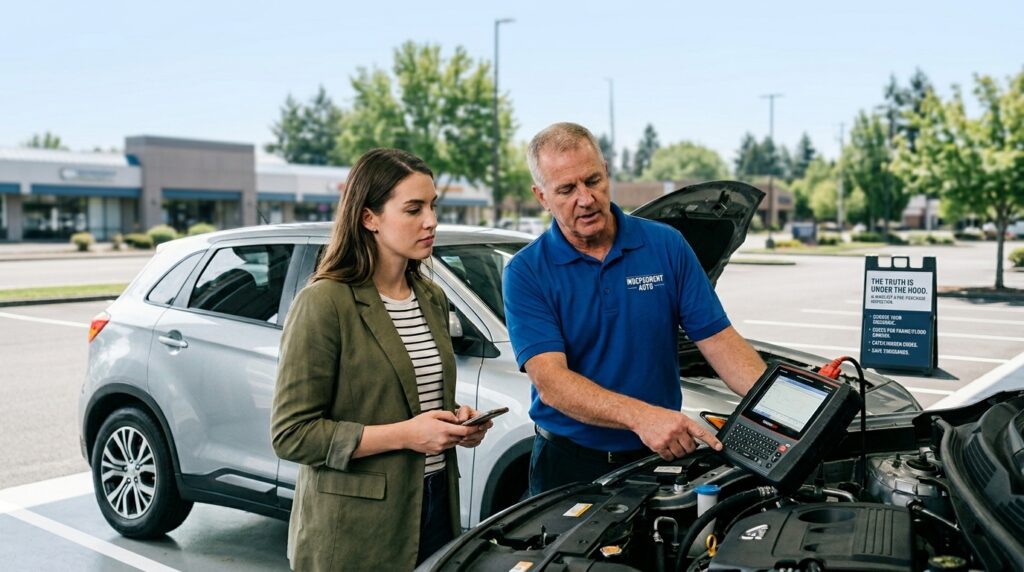
Never buy a used car without an independent Pre-Purchase Inspection. Tell the seller you want to take the car to a mechanic of your choice. If the seller refuses or insists you use their mechanic, they are hiding something.
A $150 inspection can save you $5,000 in repairs. The mechanic will check for signs of frame damage (which indicates a major hidden accident), flood damage (look for silt under the carpets), and “cleared” engine codes. If a seller recently cleared the “Check Engine” light to hide a fault, a professional scanner will catch it.
How to Handle the Money Safely
The moment of payment is when you are most vulnerable. This is where the physical and digital worlds collide, and where many buyers get scammed.
For Private Sales: Use a “Safe Exchange Zone”
Many police stations now offer “Safe Exchange Zones” with 24/7 surveillance for precisely these types of transactions. If a seller is legitimate, they won’t mind meeting there. If they insist on a dark parking lot or a remote location, cancel the meeting.
Use a Cashier’s Check or Escrow
Never carry large amounts of cash. A cashier’s check from a local bank is the standard for private sales. You can even meet the seller at their bank so they can watch the check being issued, ensuring them it’s not a forgery.
For high-value or long-distance purchases, use a reputable, well-known escrow service (like Escrow.com). Never use a link provided by the seller to an escrow site. Type the URL into your browser yourself to ensure you aren’t on a fraudulent clone site.
Identity Theft: The “New” Car Scam
In 2026, some “sellers” aren’t even after your money—they are after your data. They might ask for a photo of your driver’s license or your social security number to “run a credit check” for a private sale.
Never give personal sensitive information to a private individual. A private seller does not need your SSN to sell you a car. If they ask for excessive personal details before you’ve even seen the vehicle, they are likely harvesting data for identity theft.
Protecting Yourself from “Curbstoners”
As mentioned earlier, curbstoners are the “wolves in sheep’s clothing” of the car world. They are often selling cars that have been salvaged or have “salvage titles” (meaning the insurance company declared them a total loss).
How to spot a curbstoner:
-
They have multiple cars for sale in different listings with the same phone number.
-
The car is parked in a random parking lot or a curb, not at a residence.
-
They don’t have the maintenance records.
-
They are in a massive rush to close the deal.
Buying from a curbstoner means you have zero legal recourse when the car breaks down ten miles down the road. Stick to established dealers or genuine private parties who have a history with the vehicle.
Final Thoughts: The Power of “No”
The ultimate defense against any scam is your willingness to walk away. Scammers rely on “sunk cost” psychology—they want you to feel like you’ve invested so much time and effort into the deal that you have to finish it, even if things feel “off.”
Trust the process, not the person. Verify the VIN, get the independent inspection, confirm the title, and control the financing. If any of those steps fail, or if the seller becomes defensive or aggressive when you ask for verification, the deal is dead.
In 2026, a smart car buyer isn’t the one who gets the “cheapest” car; it’s the one who gets a legitimate car at a fair price without compromising their financial security. Stay skeptical, stay informed, and keep your guard up until the keys are in your hand and the title is in your name.