
Imagine you’ve finally found “the one.” It’s a sleek, reliable SUV that fits your budget, your family, and your weekend plans perfectly. You’ve done the test drive, smelled the fresh interior, and you’re ready to talk numbers. But as you walk toward the finance office, a nagging question starts to grow in the back of your mind: Is my credit score actually good enough for this? We often treat credit scores like a secret passkey to a VIP club, wondering if our number will grant us entry or leave us standing out in the cold. It’s a stressful moment, but the reality of 2026 is that there isn’t just one single “magic number” that dictates your ability to buy a car.
When people ask, How Much Credit Score Do You Need to Buy a Car?, they are usually looking for a simple threshold, like 650 or 700. However, the automotive lending world is much more diverse than that. In truth, you can buy a car with almost any credit score—even a zero—if you are willing to accept the terms that come with it. The real question isn’t whether you can buy a car, but rather how much that car is going to cost you over the long run. In this guide, we’re going to pull back the curtain on credit tiers, interest rates, and the subtle factors that lenders look at when they decide whether to hand you the keys.
Understanding the Credit Tiers
To understand where you stand, you first need to know how banks and credit unions categorize borrowers. While every lender has its own internal “secret sauce,” the industry generally follows a tiered structure. In 2026, these tiers are more dynamic than ever, often incorporating “alternative data” like your utility payments or rent history, but the FICO score remains the king of the mountain.
-
Super Prime (780–850): These are the “golden” borrowers. If you’re in this range, you’ll get the lowest interest rates, the best promotional deals (like 0% APR), and the most flexible terms.
-
Prime (661–780): This is where most lenders want to see you. You’ll still get very competitive rates and plenty of choices between different banks.
-
Non-Prime (601–660): You can definitely still get a loan, but the interest rates will start to climb. You might also be asked for a larger down payment.
-
Subprime (501–600): Here, things get a bit more expensive. You’ll likely be looking at double-digit interest rates, and lenders will be much more strict about your income and job history.
-
Deep Subprime (300–500): Financing is still possible through “Buy Here Pay Here” lots or specialized lenders, but the costs are very high.
It’s Not Just About the Score
While we focus heavily on the three-digit number, modern car financing is a “multi-factor” game. Lenders in 2026 are looking for a complete picture of your financial stability. I’ve seen people with 750 scores get rejected because their Debt-to-Income (DTI) ratio was too high, and I’ve seen people with 620 scores get approved instantly because they’ve worked at the same company for ten years.
Lenders look at your “Auto-Enhanced” score specifically. This is a version of your FICO score that weighs your previous car loan history more heavily than anything else. If you’ve always paid your car loans on time but were a bit messy with a credit card five years ago, your auto-enhanced score might actually be higher than your “regular” score. This is why it pays to be honest with your finance manager; they have tools to find the best angle for your specific history.
The Cost of the Gap: Why Points Matter
Let’s talk about the actual impact on your wallet. The difference between a “Prime” score and a “Subprime” score isn’t just a label—it’s a massive amount of money.
Imagine you’re financing a $30,000 vehicle over 60 months. A Super Prime buyer might get a rate of 4.5%, resulting in a monthly payment of roughly $559 and a total interest cost of about $3,500. A Subprime buyer, however, might be looking at an 18% interest rate. Their payment jumps to $762, and they will pay over $15,700 in interest alone. That is a $12,000 difference for the exact same car. This is why knowing How Much Credit Score Do You Need to Buy a Car? is so vital—it tells you whether you should buy today or spend three months fixing your score first.
Is it worth it?
Is it worth it to buy a car if your credit score is in the “Subprime” or “Deep Subprime” range? This is a deeply personal decision, but from a purely financial standpoint, it’s usually a “bridge” move.
If having a car is the only way you can get to a high-paying job that will allow you to fix your finances, then yes, it is worth it. You are paying a “convenience tax” in the form of high interest to regain your mobility. However, if you have a working car and you’re just looking for an upgrade, it is almost never worth it to finance with a poor score. You are better off waiting six months, paying down your credit card balances, and moving yourself up into the next credit tier.
What to consider before choosing
Before you sit down to sign the paperwork, you need to look at more than just the monthly payment. Consider these three factors carefully:
The Loan-to-Value (LTV) Ratio
If you have a lower credit score, the bank is already nervous. If you try to finance 100% of the car’s value plus taxes and fees, the LTV ratio will be very high. If the car depreciates (which it will), the bank is at high risk. Putting even $2,000 down can drastically change your approval odds because it lowers the bank’s risk.
The Length of the Loan
In 2026, we are seeing more 72 and 84-month loans. While these make the monthly payment look “affordable,” they are dangerous for people with lower credit scores. Because your interest rate is high, you will be “underwater” (owing more than the car is worth) for almost the entire life of the loan. Try to stick to 60 months or less if you can.
The “Total Cost of Ownership”
Remember that a higher interest rate isn’t your only cost. When you have a lower credit score, your car insurance premiums are often higher as well. Many states allow insurance companies to use credit-based insurance scores. Before you buy, get an insurance quote to make sure the combined cost of the loan and the insurance doesn’t sink your budget.
Important tips
If you are currently navigating the car-buying process, here are some “insider” tips to help you get the best deal regardless of your score:
-
Shop Your Local Credit Union First: Credit unions are member-owned and often have much more heart than big national banks. They might look at your local reputation or your long-term membership and give you a rate that a computer algorithm at a big bank would never allow.
-
Get a Co-Signer if Possible: If your score is low, a co-signer with “Prime” credit can save you thousands. Just be aware that if you miss a payment, you are damaging their credit too. Only do this if you are 100% confident in your income.
-
Check for Errors: You would be surprised how many “bad” credit scores are just the result of errors. Before you apply, pull your free credit report and make sure there aren’t old debts that should have been cleared.
-
The 14-Day Window: When you shop for a car loan, all inquiries within a 14-day period are usually treated as a single inquiry by the credit bureaus. This means you can apply at five different places to find the best rate without tanking your score.
-
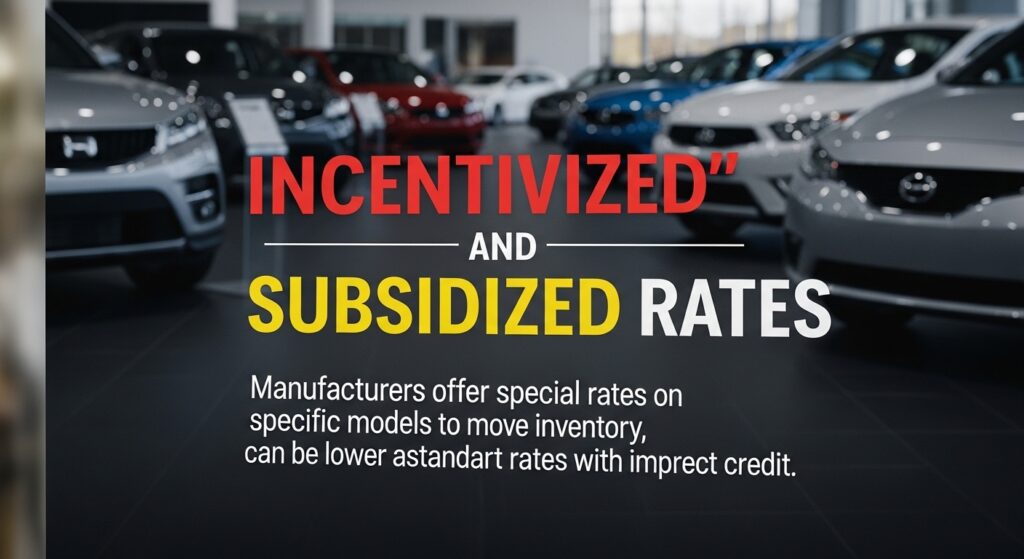
Look for “Incentivized” Rates: Sometimes, manufacturers offer special rates on specific models to move inventory. Even if your credit isn’t perfect, these “subsidized” rates can be much lower than the standard market rate.
The 2026 Perspective: AI and Alternative Data
We are living in an era where “credit” is becoming more than just a FICO score. In 2026, many lenders are using “Open Banking” to look at your actual cash flow. They might ask for permission to view your bank account to see that you consistently have money left over at the end of the month. If you have a lower score but a very healthy “net” income, these modern lenders might give you a much better deal than a traditional bank would. Don’t be afraid to look for tech-forward lenders who value your current behavior over your past mistakes.
Conclusion
So, How Much Credit Score Do You Need to Buy a Car? As we’ve seen, there is no hard floor, but there are certainly levels to this game. While you can drive away with a 500 score, the financial freedom that comes with a 700+ score is worth fighting for.
Your credit score is a living, breathing number. It isn’t a permanent reflection of who you are, but rather a snapshot of where you’ve been. If your score isn’t where you want it to be today, use this purchase as a turning point. Buy a reliable, modest car, make every single payment on time, and watch your score climb. In a year or two, you’ll be able to refinance that loan or trade in for a better deal.
A car is more than just a way to get from A to B—it’s a tool for your life. By understanding the credit “rules of the road,” you can make sure that tool helps you build a better future rather than dragging you into a cycle of debt. Take a deep breath, do your research, and walk into that dealership knowing exactly what you’re worth. The road ahead is wide open!