
Buying a car is one of those rare life events that manages to be exhilarating and exhausting at the exact same time. You spend weeks, maybe months, obsessing over horsepower, legroom, and that perfect shade of metallic gray. You finally negotiate a price that feels fair, you sign a mountain of paperwork, and you drive off the lot feeling like a champion.
Then, the reality of ownership sets in. Within the first ninety days, many buyers realize that the “price” they negotiated was just the tip of a very large, very expensive iceberg. In 2026, the financial landscape of car ownership has shifted, and the “sticker price” is more of a suggestion than a final tally.
If you want to be a truly smart buyer, you have to look past the monthly loan payment. You need to account for the “phantom costs” that bleed bank accounts dry. Here is a deep dive into the hidden costs of buying and owning a car that the dealership won’t mention.
1. The Finance and Insurance (F&I) Room “Sneak-Ins”
The most dangerous place for your wallet isn’t the showroom floor; it’s the small, windowless office where you sign the final contracts. This is where the “Out-the-Door” price often gets inflated by thousands of dollars through products that sound essential but are often overpriced.
Documentation Fees
Almost every dealer charges a “Doc Fee.” While it sounds like a government requirement, it is essentially pure profit for the dealership to cover the cost of filing paperwork. In some states, these are capped at $150; in others, they can soar to nearly $1,000. Always ask for this number upfront so it doesn’t surprise you at the final second.
VIN Etching and Protection Packages
Dealers love to “pre-install” items like nitrogen in the tires, VIN etching on the windows, or ceramic paint coatings. They might tell you these are mandatory. They aren’t. Often, they charge $500 for a service you could do yourself for $50. If you see these on the itemized bill, ask for them to be removed.
2. The Taxman Always Collects
When you see a car listed for $30,000, you need to mentally add a significant percentage for the government. Sales tax is the most obvious hidden cost, and it can vary wildly depending on your city and state.
In many regions, a 7% or 8% sales tax adds over $2,000 to a $30,000 purchase. If you didn’t save for this or include it in your loan, you might find yourself with a much higher monthly payment than you anticipated.
Furthermore, some states charge an annual “Ad Valorem” tax or personal property tax on vehicles. This means you don’t just pay tax when you buy the car; you pay a hundreds of dollars every year just for the privilege of owning it.
3. Insurance Premiums: The Great Variable
In 2026, auto insurance rates have become increasingly complex. Insurance companies are no longer just looking at your age and driving record; they are looking at the specific technology in your car.
The “Tech” Penalty
Modern cars are packed with sensors, cameras, and lidar systems. A simple fender bender that used to cost $500 to fix now costs $3,000 because the “smart” bumper needs to be recalibrated by a specialist.
Because of this, insurance premiums for late-model cars have skyrocketed. Before you sign the papers, call your insurance agent with the specific VIN of the car you are looking at. You might discover that the “affordable” sporty sedan carries an insurance premium that effectively doubles your monthly cost of ownership.
4. Depreciation: The Cost You Don’t See
Depreciation is the silent killer of wealth. It isn’t a bill you pay, but it is money you lose every single day the car sits in your driveway.
On average, a new car loses about 20% of its value in the first year and roughly 60% by the end of year five. If you finance a car with a small down payment, depreciation can put you “underwater” on your loan. This means you owe the bank $25,000 for a car that is only worth $20,000 on the open market.
To mitigate this hidden cost, research “resale value” before you buy. A car that holds its value well is effectively “cheaper” than a car with a low sticker price that loses half its value in two years.
5. Maintenance and “Wear-and-Tear” Items
A new car comes with a warranty, which is great for major mechanical failures. But a warranty does not cover “consumables.”
The Tire Surprise
In recent years, manufacturers have moved toward larger wheel sizes (19, 20, or even 22 inches) because they look better. However, the cost of replacing these tires is significantly higher than the standard 16-inch tires of the past. A set of four tires for a modern SUV can easily cost $1,200 to $1,600.
Specialized Oil and Fluids
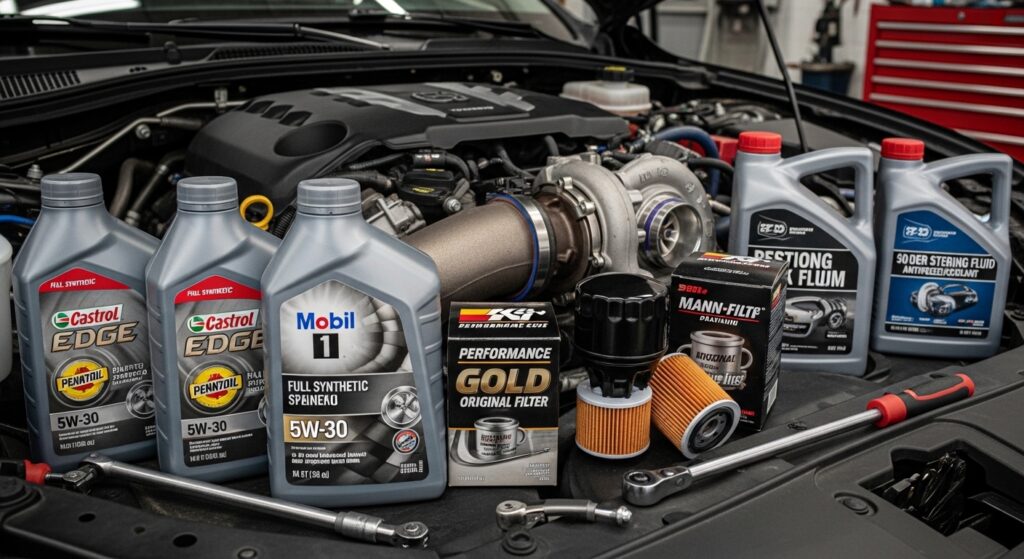
Many modern engines, especially turbocharged ones, require full synthetic oil and specialized filters. What used to be a $40 oil change is now often $100 or more. Over a five-year period, these minor maintenance tasks add up to thousands of dollars that many buyers fail to budget for.
6. Fuel and Charging Costs
Whether you are buying a gas-guzzler or a sleek new Electric Vehicle (EV), the cost of “refueling” is a permanent part of your budget.
The Premium Fuel Trap
Many luxury and performance cars require premium (91 or 93 octane) gasoline. If you are used to buying regular, the jump to premium can add $15 to $20 to every single tank. Over a year of commuting, that’s an extra $1,000 in hidden fuel costs.
EV Infrastructure and Home Charging
If you are switching to an EV, the “hidden cost” is often the home setup. While you save on gas, you may need to spend $1,000 to $2,500 to install a Level 2 home charger and upgrade your electrical panel. Additionally, public “fast charging” can sometimes be as expensive as gasoline, so don’t assume your fuel costs will drop to zero immediately.
7. Registration and Title Fees
Every year, you have to pay the state to keep your car legal. While the initial registration is usually rolled into the dealer’s paperwork, the annual renewal can be a shock.
In some states, registration fees are based on the vehicle’s weight or its original MSRP. For a new, heavy EV or a luxury SUV, your annual registration “tab” could be $500 or more. It’s a recurring hidden cost that often hits right when you’ve finally gotten used to your monthly loan payments.
8. Opportunity Cost
This is a concept from economics that every smart car buyer should understand. The money you spend on a car is money that isn’t doing anything else.
If you put $10,000 down on a car and pay $600 a month for five years, that is money that isn’t being invested in the stock market or a retirement account. Because a car is a depreciating asset, the “opportunity cost” is the lost potential growth of that money.
If you financed a slightly cheaper car and invested the $200 difference every month, you could have tens of thousands of dollars more in your bank account a decade from now. It’s the ultimate hidden cost: the wealth you don’t build because you are over-leveraged on a vehicle.
Strategies to Unmask the Hidden Costs
So, how do you defend yourself? You use a Total Cost of Ownership (TCO) approach.
-
Use Online TCO Calculators: Tools like the ones provided by Edmunds or Kelley Blue Book can show you the projected cost of insurance, maintenance, and depreciation over five years.
-
Get Insurance Quotes First: Never buy a car until you know exactly what it will do to your insurance premium.
-
Ask for an Itemized “Out-the-Door” Price: Before you talk about monthly payments, ask for a piece of paper that lists every single fee, tax, and add-on. If you don’t recognize a fee, ask them to explain it or remove it.
-
Factor in the “First Service”: Research what the 30,000 and 60,000-mile services cost for your specific model. Some European brands have “major services” that can cost $2,000 or more.
Final Thoughts
Smart car buying isn’t about finding the lowest monthly payment; it’s about understanding the total financial impact of the machine sitting in your driveway. A car is a tool, but it’s also a significant expense that requires constant feeding.
When you account for the taxes, the insurance, the depreciation, and the maintenance, you might realize that the car you thought you could afford is actually a bit too much for your budget—or that a slightly more expensive, more reliable car is actually the better deal in the long run.
By unmasking these hidden costs before you sign the contract, you ensure that the only thing you feel when you drive your new car is the thrill of the open road, not the stress of a shrinking bank account. Stay informed, stay objective, and always look past the sticker.