
We have all been there, standing on the edge of a major purchase, clutching a savings account balance and wondering just how much of it we should let go. Whether it is a sleek new car or a first home, the “down payment” is often the most stressful hurdle in the entire process. Do you go all-in and drain your reserves to keep the monthly bills low, or do you hold onto your cash for a rainy day and accept a higher interest rate? It feels like a high-stakes game of financial poker where the dealer is the bank, and the rules seem to change every time you sit down at the table.
In the current market of 2026, the old “20% rule” isn’t the law of the land anymore, but that doesn’t mean it isn’t still a powerful tool. As interest rates fluctuate and the cost of living keeps everyone on their toes, finding the Best Down Payment Strategy (Simulation) is about more than just picking a random number. It is about a delicate balance between liquidity—having cash you can actually touch—and equity. We are going to run through the numbers together, look at some real-world simulations, and figure out how to keep the most money in your pocket over the long haul.
Why the Initial “Hit” Matters
When you put money down, you aren’t just lowering your monthly payment; you are buying “peace of mind” and reducing the bank’s risk. Lenders look at something called the Loan-to-Value (LTV) ratio. If you put 0% down, the bank is taking a massive gamble on you. If the market dips and the value of that car or house drops, they are stuck with an asset worth less than the loan.
Because of this risk, they charge you for it. This comes in the form of higher interest rates, mandatory Private Mortgage Insurance (PMI) for homes, or gap insurance for cars. A solid down payment acts as a shield against these extra fees. It is essentially a “guaranteed return” on your investment because every dollar you put down is a dollar you aren’t paying interest on for the next five to thirty years.

The Simulation: $50,000 Purchase Breakdown
To see how the Best Down Payment Strategy (Simulation) actually works, let’s look at three different buyers purchasing a $50,000 asset (let’s say a high-end truck or a small studio condo) with a 5-year loan at a 7% base interest rate.
Buyer A: The “Cash Is King” Strategist (0% Down)
-
Down Payment: $0
-
Loan Amount: $50,000
-
Monthly Payment: ~$990
-
Total Interest Paid: ~$9,400
-
The Reality: Buyer A keeps their cash in the bank, but they pay the highest possible “rent” for the money. They are also “upside down” the second they drive away.
Buyer B: The “Balanced” Approach (10% Down)
-
Down Payment: $5,000
-
Loan Amount: $45,000
-
Monthly Payment: ~$891
-
Total Interest Paid: ~$8,460
-
The Reality: This buyer saves nearly $1,000 in interest and lowers their monthly obligation by $100. It is a middle-ground that preserves some liquidity.
Buyer C: The “Equity First” Power Move (20% Down)
-
Down Payment: $10,000
-
Loan Amount: $40,000
-
Monthly Payment: ~$792
-
Total Interest Paid: ~$7,520
-
The Reality: Buyer C saves nearly $2,000 in interest compared to Buyer A. More importantly, they likely unlock a lower interest rate (let’s say 6% instead of 7%), which would save them even more.
The Hidden Power of the 20% Threshold
In 2026, the 20% mark remains a psychological and financial milestone. For homeowners, this is the magic number that usually eliminates PMI. For car buyers, it is the point where you almost never have to worry about being “underwater.”
If you can reach that 20% mark without emptying your emergency fund, it is almost always the “Best Down Payment Strategy (Simulation)” winner. Why? Because you aren’t just saving on interest; you are buying freedom. If you need to sell the asset in a hurry, you have a 20% “cushion” that ensures you can walk away from the deal with cash in your hand rather than owing the bank a check just to say goodbye to your car.
Is it worth it?
Is it truly worth it to drop a massive chunk of change all at once? The answer depends entirely on what that money would be doing otherwise.
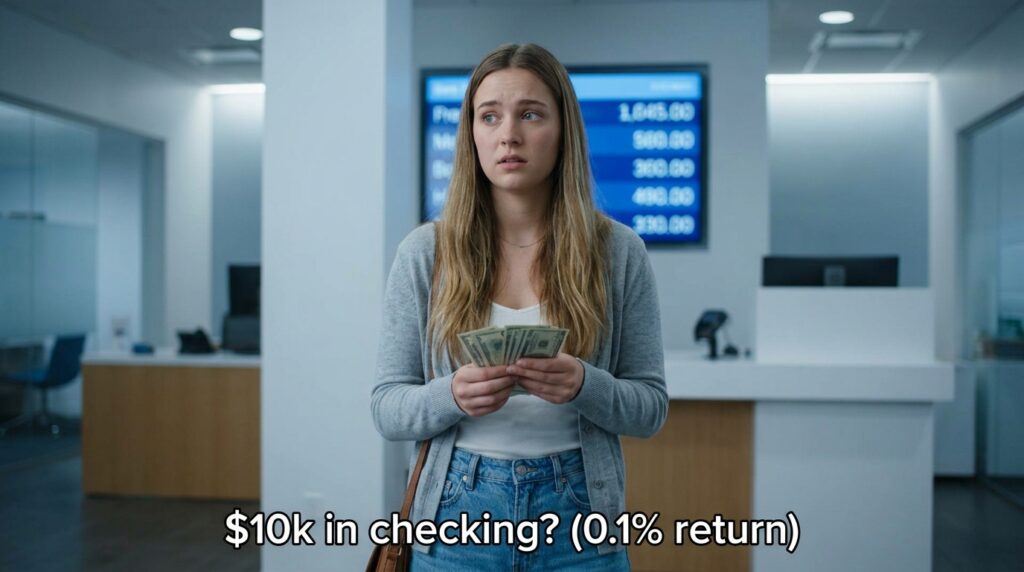
If your $10,000 is sitting in a checking account earning 0.1% interest, while your loan is charging you 7%, it is absolutely worth it to put that money down. You are effectively “earning” 7% by avoiding that debt.
However, if you are a savvy investor and you believe you can put that $10,000 into a project or a stock portfolio that returns 10%, then putting $0 down might actually be the smarter move. You are “arbitraging” the difference between the bank’s 7% and your 10%. But be honest with yourself—are you actually going to invest that money, or are you just going to spend it? Most people are better off with the “guaranteed” return of a down payment.
What to Consider Before You Choose
Before you decide on a percentage, walk through these three critical factors that often get overlooked in the excitement of a new purchase:
1. Your “Sleep at Night” Fund
Never, ever use your emergency fund for a down payment. If you have $15,000 total and the 20% down payment is $10,000, you are leaving yourself with only $5,000 for medical bills, job loss, or car repairs. In this case, a 10% down payment is much “smarter” because it keeps your safety net intact.
2. The Interest Rate “Cliff”
Ask your lender for a “rate table.” Sometimes, moving from a 5% down payment to a 10% down payment drops your interest rate by half a percent. Other times, the difference between 15% and 20% is negligible. You want to find the “sweet spot” where you get the biggest rate drop for the least amount of cash.
3. Future Opportunity Costs
In 2026, we have to look at where the economy is going. If you think home prices or car values are about to skyrocket, getting into the asset sooner with a lower down payment might be better than waiting two years to save up 20%. Time in the market often beats timing the market.
Important Tips
-
The “Found Money” Rule: If you get a tax refund or a bonus at work, don’t just spend it. Use it to “bridge the gap” to the next down payment tier. Moving from 10% to 15% can change the entire trajectory of your loan.
-
Negotiate the Price, Not the Payment: Salespeople will try to roll your down payment into a “low monthly cost.” Keep the conversations separate. Negotiate the lowest total price first, and then decide how much cash to put down.
-
Check for Incentives: Some manufacturers in 2026 offer “Down Payment Matching.” If you put down $2,000, they might add another $1,000. These are the only times where a lower down payment might actually be more efficient.
-
The “3-Day Rule”: Once you decide on a down payment amount, wait three days. If you still feel comfortable with that much cash leaving your bank account, go for it. If you feel a “pit” in your stomach, you are probably overextending yourself.
The Psychology of the Large Down Payment
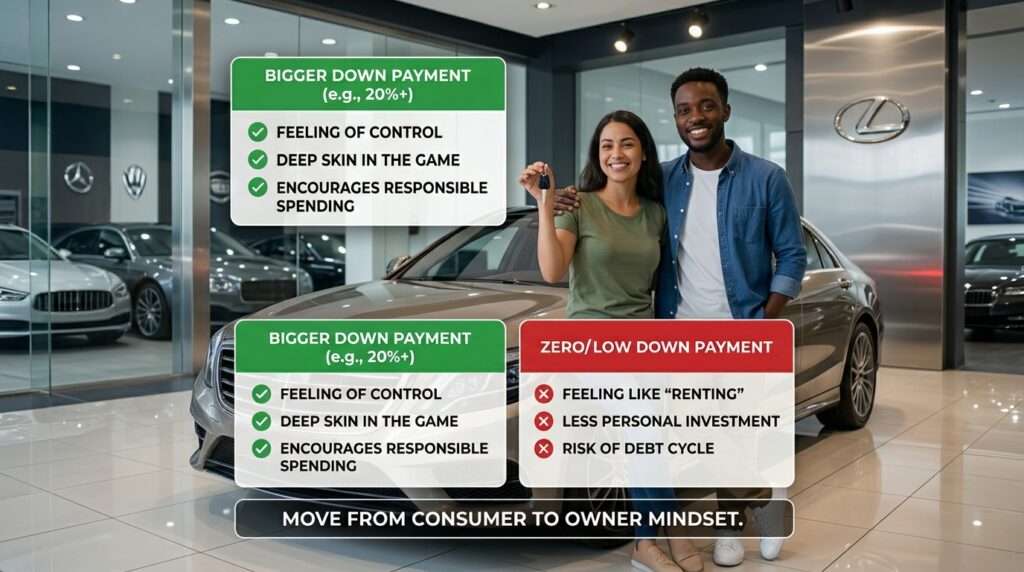
There is an underrated benefit to putting more money down: the feeling of ownership. When you own 20% or 30% of your car or home on day one, you treat it differently. You are less likely to overspend on other things because you have “skin in the game.”
On the flip side, people with 0% down loans often feel like they are just “renting” their life from the bank. This can lead to a cycle of debt where you never truly own anything. A strong down payment is the first step in breaking that cycle and moving from a consumer mindset to an owner mindset. It is a declaration that you are in control of your finances, not the other way around.
Conclusion: Crafting Your Strategy
At the end of the day, the Best Down Payment Strategy (Simulation) isn’t a single number that applies to everyone. It is a custom fit. If you have high-interest debt elsewhere (like credit cards), keep your down payment small and use the extra cash to kill that 24% interest debt first. That is common sense math.
But if your other finances are in order, aim for that 20% mark. It is the “Goldilocks Zone” of personal finance—not too much that you are broke, but not too little that the bank owns you.
Remember, a down payment is a one-time “pain” for a long-term “gain.” Every thousand dollars you put down today is a gift you are giving to your future self three, five, or even thirty years from now. Take a breath, look at your “Sleep at Night” fund, and make the move that lets you drive or live with a smile on your face and no weight on your shoulders. You’ve got this!