
Choosing a car in 2026 is no longer just about picking a color and a brand. With the lines between vehicle segments blurring—thanks to the rise of crossovers and electrified powertrains—the decision between a sedan, an SUV, or a truck has become a strategic financial move.
Each body style represents a different lifestyle philosophy and, more importantly, a different set of long-term costs. Whether you are navigating narrow city streets, hauling a growing family, or managing a weekend renovation project, your choice will dictate your monthly budget for years to come.
In this guide, we will break down the “real-world” pros and cons of each category to help you decide which one deserves a spot in your driveway.
The Modern Sedan: The Financial Specialist
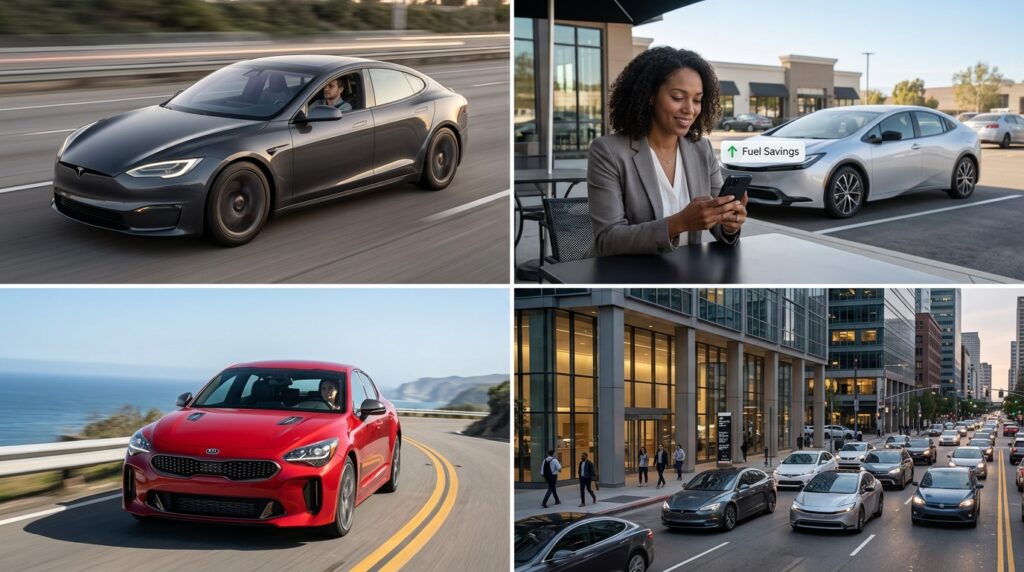
For a few years, it seemed like the sedan was a dying breed, but in 2026, it has staged a massive comeback. Why? Because as fuel and energy prices fluctuate, the aerodynamic efficiency of a sedan is an unbeatable advantage.
Efficiency and Aerodynamics
Sedans sit lower to the ground and cut through the air with much less resistance than a boxy SUV. This means that whether you are driving a gas-powered car, a hybrid, or a full EV, you will almost always get more miles (or kilometers) per charge or gallon in a sedan.
For the daily commuter who spends 40 minutes on the highway each way, the savings in fuel alone can often cover a significant portion of the car’s monthly insurance premium.
Better Driving Dynamics
If you enjoy the act of driving, the sedan is your best friend. Because they have a lower center of gravity, sedans handle curves with more poise and have shorter braking distances than heavier SUVs.
In a world where many cars feel like “appliances,” the sedan still offers a connected, agile experience that makes a morning commute feel like less of a chore and more of an activity.
The SUV: The Versatility Powerhouse
The SUV (and its smaller sibling, the Crossover) is the undisputed heavyweight champion of the global car market. It has become the “default” choice for a reason: it tries to be everything to everyone.
Ground Clearance and Visibility
One of the primary reasons buyers choose an SUV is the “commanding view of the road.” Sitting higher up provides a psychological sense of safety and allows you to see over the cars in front of you.
Additionally, that extra ground clearance isn’t just for off-roading; it’s for reality. It means not worrying about deep potholes, high curbs, or steep driveways that would scrape the nose of a low-slung sedan.
Cargo Flexibility
While a sedan has a trunk, an SUV has a “cavern.” The ability to fold the rear seats flat to transport a new TV, a bike, or a week’s worth of camping gear is a luxury of convenience.
For families, the SUV is a non-negotiable tool. Loading a child into a car seat is significantly easier on your back when the seat is at waist height rather than knee height. This ergonomic benefit is often what tips the scales for parents.
The Pickup Truck: The Ultimate Multi-Tool
In 2026, the pickup truck has transcended its “work vehicle” origins. Modern trucks are now luxury vehicles that just happen to have a massive bed in the back. If you are choosing a truck, you are choosing a vehicle that refuses to say “no” to any task.
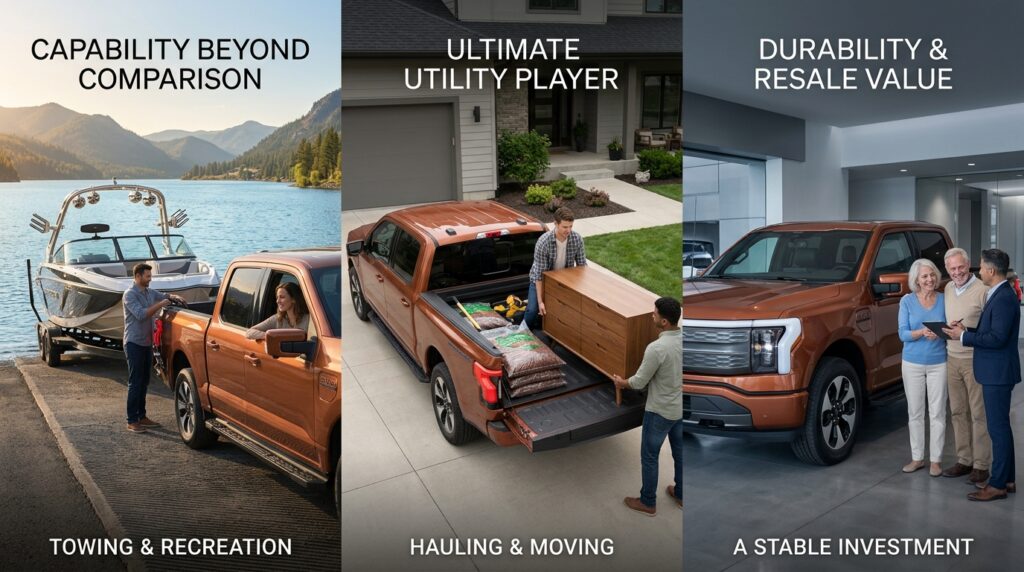
Capability Beyond Comparison
Whether it’s towing a boat, hauling a yard of mulch, or helping a friend move furniture, the truck is the ultimate utility player. If your lifestyle involves “doing” rather than just “going,” the truck is the only vehicle that doesn’t limit your potential.
Even if you only use the bed once a month, that one time usually saves you the hassle and cost of renting a trailer or paying for a delivery service.
Durability and Resale Value
Trucks are built on “body-on-frame” architectures, which are inherently more rugged than the “unibody” construction of sedans and most crossovers. This durability translates into incredible resale value.
Historically, trucks depreciate slower than almost any other vehicle type. When you finance a truck, you are putting your money into a very stable “vault.” In five years, a well-maintained truck will likely be worth a much higher percentage of its original price than a comparable sedan.
The “Hidden” Comparisons: Cost of Ownership
To make a smart buy, you have to look past the sticker price. The body style you choose changes the “math” of your life in several subtle ways.
1. The Insurance Gap
Generally speaking, sedans are the cheapest to insure, followed by SUVs, with trucks often being the most expensive. Trucks are larger, heavier, and can cause more damage in an accident, which insurance companies factor into their premiums.
Furthermore, high-end SUVs and trucks are frequent targets for theft (specifically tailgates and catalytic converters), which can further drive up your monthly insurance “hidden cost.”
2. Maintenance and Consumables
Everything is bigger on an SUV or a truck. Tires for a sedan might cost $600 a set; for a large SUV or truck, that same set of tires could easily exceed $1,200.
Brakes wear out faster on heavier vehicles, and oil changes often require more volume. When you choose a larger vehicle, you are essentially signing up for a “size tax” on every maintenance visit.
Safety Considerations in 2026
Safety technology has leveled the playing field significantly, but physics still matters.
-
Sedans are less likely to roll over in an emergency maneuver because they are low to the ground. They are also generally safer for pedestrians.
-
SUVs and Trucks offer more “crumple zone” and mass in a multi-vehicle collision. However, their height makes them more prone to rollovers if you have to swerve at high speeds.
In 2026, the smartest safety feature is Active Safety Tech (Automatic Emergency Braking, Lane Keep Assist). Ensure that whatever body style you choose, these features are included, as they provide a safety net that transcends vehicle size.
The Urban vs. Suburban Dilemma
Where you live should dictate what you drive.
-
The Urbanite: If you live in a city with tight parking garages and narrow streets, a truck or a full-size SUV can be a nightmare. Trying to find a parking spot for a 20-foot-long truck in a downtown core is a specialized form of stress you don’t need.
-
The Suburbanite/Rural Buyer: If you have a wide driveway and spend your weekends at hardware stores or trailheads, the sedan’s limitations will quickly become frustrating. In this environment, the SUV or truck is the “right tool for the job.”
Which One Is Right for Your Loan?
Since you are likely financing this purchase, think about the Total Monthly Cost (Payment + Fuel + Insurance + Maintenance).
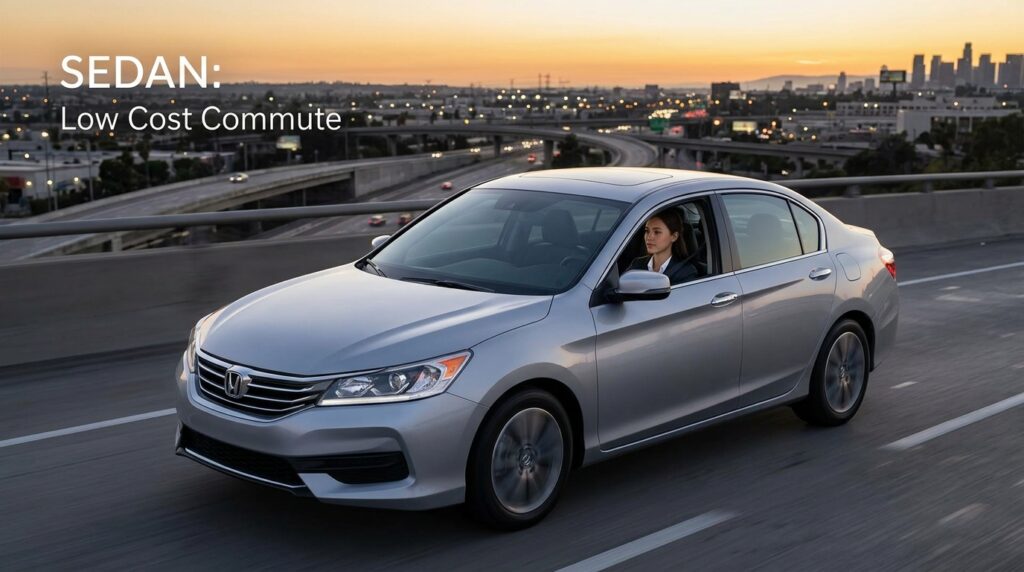
Choose a Sedan if:
-
Your primary goal is the lowest possible cost per mile.
-
You have a long highway commute.
-
You value a sporty, connected driving feel.
-
You don’t frequently transport large, bulky items.
Choose an SUV if:
-
You need “all-in-one” versatility for a family.
-
You live in an area with poor road conditions or heavy snow.
-
You prefer a high seating position for better visibility.
-
You need more cargo space than a trunk can provide.
Choose a Truck if:
-
You have a hobby or job that requires towing or hauling.
-
You value long-term resale value over initial fuel economy.
-
You want a vehicle that can handle rugged terrain and work-site conditions.
-
You have the space to park and maneuver a larger footprint.
Final Thoughts
The “perfect” car doesn’t exist; there is only the car that is perfect for your specific set of circumstances. In 2026, we are lucky to live in an era where you don’t have to sacrifice much. You can find “sporty” SUVs, “efficient” trucks, and “spacious” sedans.
However, the most successful buyers are the ones who are honest about their needs. Don’t buy a truck for the “one day a year” you might go to the dump; you can rent a truck for $20 that day. Don’t buy a tiny sedan if you have three kids and a dog; the stress of the cramped space will outweigh the fuel savings.
Take a hard look at your last 30 days of driving. Did you need a bed? Did you need 4WD? Did you wish you had a smaller car for that tight parallel parking spot? Let your actual behavior guide your purchase, and you’ll find that the choice between a sedan, SUV, or truck becomes incredibly clear.
Happy hunting, and may your next vehicle be the perfect fit for your road ahead!