
There is a unique kind of excitement that comes with finding the perfect car. You can already see yourself behind the wheel, the digital dash glowing, and the smell of a fresh interior filling the cabin. But then comes the moment everyone dreads: the down payment. For many, scraping together several thousand dollars at once is the biggest hurdle to getting a reliable vehicle. This is where the allure of “Zero Down” financing comes in—a promise that you can drive away today without handing over a single cent at the dealership. In 2026, where digital banking and instant credit checks have made car buying faster than ever, this option has become a staple of the automotive market.
Understanding How Zero Down Car Financing Works (Pros & Cons) is essential before you sign on the dotted line. While it sounds like a dream come true for your immediate cash flow, it is a sophisticated financial product that requires a clear-eyed look at the long-term costs. Essentially, when you put zero down, you are asking the lender to take on 100% of the risk. They aren’t doing this out of the goodness of their hearts; they are balancing that risk with specific terms that could affect your wallet for years. As an expert who has seen both the triumphs and the pitfalls of this method, I want to walk you through exactly what happens when that “down payment” line on your contract is a zero.
The Mechanics of a No-Money-Down Deal
In a traditional car loan, a down payment serves as a buffer. If you buy a $30,000 car and put $6,000 down, you only owe $24,000. If you decide to sell the car a year later, you likely owe less than what the car is worth. With zero down financing, you are financing the full purchase price, plus taxes, title fees, and dealership “doc” fees.
This means you are starting your journey with “negative equity” from the very first mile. Because a new car depreciates the moment it leaves the lot, you will owe the bank significantly more than the car’s market value for a long period. In 2026, lenders use advanced algorithms to determine who qualifies for this. Generally, they look for “prime” credit scores (usually 700+) and a stable income history to ensure that even without a “stake” in the car, you are likely to keep up with the payments.

The Pros: Why Zero Down Is Tempting
It’s easy to see why this is a popular choice. For many, it isn’t about not having the money; it’s about how that money is best used.
1. Liquidity and Emergency Funds
The most practical reason to choose zero down is to keep your cash in the bank. In an unpredictable economy, having $5,000 in a high-yield savings account is often smarter than putting it into a depreciating asset like a car. If you have an unexpected medical bill or home repair, you can’t “withdraw” the money you put into your car’s down payment.
2. Immediate Transportation Needs
Sometimes, life doesn’t wait for you to save up. If your old car breaks down and you need to get to work to keep making a living, zero down financing is a lifesaver. It bridges the gap between your current situation and your future earnings, allowing you to stay productive without a massive upfront barrier.
3. Investment Opportunities
In 2026, some investment vehicles offer returns that might be higher than the interest rate on your car loan. If you are a savvy investor, you might decide that your capital is better spent in the market than sitting in a garage. By financing 100% of the car at a reasonable rate, you keep your investment strategy on track.
The Cons: The Hidden Costs of Convenience
The downsides of zero down financing are often invisible until a few years into the loan. You have to be comfortable with the “math” of debt to navigate this successfully.
1. Higher Interest Rates
Because the lender is taking a higher risk, they will almost always charge a higher interest rate. Even a 1% or 2% difference might not seem like much on a monthly basis, but over a 60 or 72-month loan, it adds up to thousands of dollars in extra interest. You are effectively paying a “convenience fee” for not having a down payment.
2. Higher Monthly Payments
This is simple math. Financing $30,000 results in a much larger monthly bill than financing $24,000. If your budget is tight, the lack of a down payment can leave you with a monthly obligation that feels like a weight around your neck, especially if your income changes in the future.
3. The “Underwater” Trap
This is the biggest risk. If your car is totaled in an accident or if you need to sell it unexpectedly, you will likely find that you owe more to the bank than the car is worth. This is known as being “upside down” or having negative equity. Without a down payment, it can take three or four years of payments before you finally “break even” with the car’s value.
Comparison: $5k Down vs. Zero Down
Let’s look at a real-world example of a $35,000 SUV over a 60-month term.
Scenario A: $5,000 Down
-
Loan Amount: $30,000
-
Interest Rate: 5%
-
Monthly Payment: ~$566
-
Total Interest: ~$3,960
Scenario B: Zero Down
-
Loan Amount: $35,000
-
Interest Rate: 7% (Higher due to risk)
-
Monthly Payment: ~$693
-
Total Interest: ~$6,580
By choosing the zero down option, you pay $127 more per month and over $2,600 more in total interest. You have to ask yourself: Is keeping that $5,000 in your pocket today worth paying an extra $2,600 over five years?
Is it worth it?
Determining if zero down financing is worth it depends entirely on your financial health and your goals. If you have a rock-solid income and a high credit score, and you simply prefer to keep your cash liquid for other investments, it can be a very smart move. You are using the bank’s money to your advantage.
However, if you are choosing zero down because you don’t have any savings, you might be walking into a trap. If a $500 repair comes up or you lose your job, you have no safety net, and you’re stuck with a high monthly payment on a car you can’t sell for a profit. In my experience, zero down is a tool for the financially comfortable, not a shortcut for those who aren’t ready for a car.
What to consider before choosing
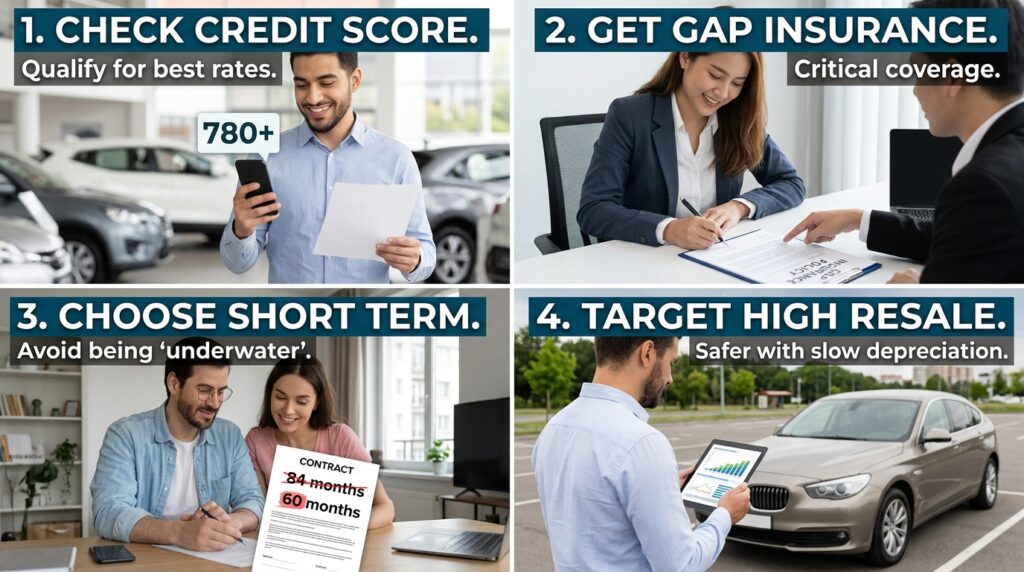
Before you agree to a no-money-down deal, run through this checklist:
-
Your Credit Score: Do you actually qualify for the best “zero down” rates? If the dealer says “yes” but at a 12% interest rate, walk away.
-
GAP Insurance: This is non-negotiable for zero down deals. GAP insurance covers the difference between what the insurance pays and what you owe if the car is totaled. Without it, a total-loss accident could leave you paying for a car that doesn’t exist.
-
Loan Term: Avoid 84-month loans. Combining zero down with a long term is a recipe for being “underwater” for the entire life of the vehicle.
-
Resale Value: Is the car you’re buying known for holding its value? A car that depreciates slowly makes a zero down deal much safer.
Important tips
To make a zero down deal work for you, follow these expert strategies:
-
The “Taxes and Fees” Down Payment: Even if you don’t put money toward the principal, try to at least pay the sales tax and registration fees upfront. This prevents you from financing “nothing” and keeps your loan balance slightly lower.
-
Shop Different Lenders: Don’t just take the dealer’s offer. Credit unions in 2026 often have specific “100% financing” programs with much better rates than the manufacturer’s finance arm.
-
Check for Manufacturer Promos: Sometimes, a brand will offer “0% APR and $0 Down” as a special event. This is the “Holy Grail” of car buying. If you find this, take it—it’s essentially free money.
-
Be Honest About Your Budget: Make sure the higher monthly payment won’t keep you from saving money elsewhere. A car should get you to your goals, not prevent you from reaching them.
The 2026 Perspective: Digital Leasing vs. Zero Down
We are seeing a trend where “Zero Down” financing is competing heavily with car subscriptions and digital leasing. While a lease also offers low upfront costs, the zero down finance deal results in you owning the asset eventually. In 2026, with the high resale value of used cars, ownership is often still the smarter financial play, provided you can handle the responsibility of maintenance once the warranty expires.

Conclusion
Understanding How Zero Down Car Financing Works (Pros & Cons) is about balancing the present with the future. It offers an incredible level of accessibility and liquidity, allowing you to step into a new vehicle without the pain of a massive upfront payment. For the disciplined buyer with a strong credit profile, it’s a strategic way to manage wealth.
But for the unwary, it can be a path to financial “suffocation,” leading to higher interest, higher payments, and years of owing more than the car is worth. There is no such thing as a “free” car, and the money you don’t pay today will always be collected tomorrow—with interest.
If you decide to go with a zero down deal, do so with your eyes wide open. Get the GAP insurance, keep the loan term reasonable, and ensure you’re buying a car that will serve you well for years to come. The best financing deal is the one that lets you sleep well at night, knowing that you own your car and your car doesn’t own you. Happy driving!