
We’ve all been there—scrolling through car listings late at night, bouncing between the intoxicating smell of a brand-new interior and the practical allure of a three-year-old bargain. It feels like a tug-of-war between your heart and your spreadsheet. You want the reliability and the shiny tech of a new model, but your brain keeps whispering about that “new car smell” costing you ten thousand dollars the moment you drive over the curb. In 2026, the market has shifted significantly, making the math more complex than it used to be.
Deciding between a new or used vehicle isn’t just about the sticker price anymore; it’s about the cost of money itself. Interest rates, insurance premiums, and maintenance schedules have all evolved, and what worked for your last car purchase might be a financial trap today. In this deep dive, we’re going to strip away the marketing fluff and look at the “New vs Used Car Loan Cost Comparison (2026 Data)” to see which path actually leaves more cash in your pocket at the end of the journey.
The Landscape of 2026: Why the Math Has Changed
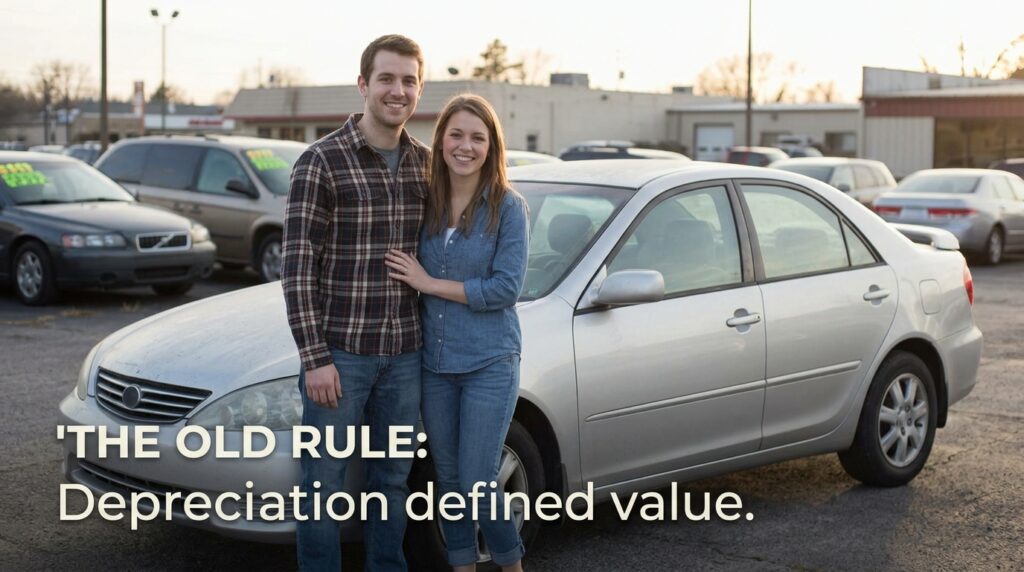
To understand the current state of car loans, we have to acknowledge that the “old rules” have taken a backseat. Historically, used cars were the undisputed kings of value because depreciation hit new cars like a freight train. While depreciation still exists, the gap has narrowed in strange ways. New cars now come with hyper-efficient hybrid systems or advanced electric drivetrains that hold their value better than the gas-guzzlers of the past.
Furthermore, lenders in 2026 have become much more surgical with their interest rates. A “good” rate on a new car might be half of what you’d pay for a used one. This creates a fascinating paradox: sometimes the more expensive car (on paper) ends up costing you less every month. It’s a game of totals, not just monthly installments, and that’s exactly what we need to break down.
New vs Used Car Loan Cost Comparison: The Simulations
Let’s look at two realistic scenarios. We’ll assume you’re looking for a reliable, mid-sized family vehicle. For this simulation, we’ll use a high-quality SUV—a staple of the modern driveway.
Scenario A: The 2026 “Brand New” Model
-
Sticker Price: $42,000
-
Down Payment: $6,000
-
Loan Amount: $36,000
-
Interest Rate (Promo APR): 3.9%
-
Term: 60 Months
-
Monthly Payment: ~$661
-
Total Interest Paid: $3,660
-
Total Out-of-Pocket Cost: $45,660
Scenario B: The 2023 “Certified Pre-Owned” (Used) Model
-
Sticker Price: $31,000
-
Down Payment: $6,000
-
Loan Amount: $25,000
-
Interest Rate (Standard Used): 8.2%
-
Term: 60 Months
-
Monthly Payment: ~$509
-
Total Interest Paid: $5,540
-
Total Out-of-Pocket Cost: $36,540
At first glance, the used car looks like the winner, saving you roughly $9,000 over five years. But wait—there’s more to the story. The new car comes with a 5-year bumper-to-bumper warranty and three years of included maintenance. The used car is likely out of warranty or close to it, and it will need new tires, a battery, and a major service within the first 24 months. When you add $3,000 to $4,000 in maintenance to the used car’s total, that $9,000 gap starts to shrink rapidly.
The “Invisible” Costs You Can’t Ignore
When performing a New vs Used Car Loan Cost Comparison (2026 Data), most people forget the three “I”s: Interest, Insurance, and Inventory value.
Interest Rate Spreads
In 2026, the spread between new and used car interest rates has widened. Manufacturers are using low-interest financing as a primary tool to move new inventory. It is not uncommon to see 0% or 1.9% offers on new cars, while used car loans rarely dip below 7% unless you have a flawless credit history. Over a five-year loan, that percentage difference can eat up a huge chunk of the “savings” you thought you gained by buying used.
Insurance Premiums
Here’s a kicker: insurance for a new car is often cheaper or nearly identical to a three-year-old car. Why? Safety tech. A 2026 model is packed with the latest collision avoidance, lidar sensors, and autonomous braking. Insurance companies love these features because they lead to fewer expensive accidents. Always call your agent for a quote on both options before signing the paperwork.
Residual Value (The “Exit” Strategy)
Think about five years from now. You go to trade in your car. If you bought the new 2026 model, you’re selling a 5-year-old car with one owner and a clear history. If you bought the 2023 model, you’re now selling an 8-year-old car with multiple owners. The 2026 model will command a much higher resale price, which effectively acts as a “rebate” on the total cost of ownership.
What to Consider Before You Choose
Choosing isn’t just about the math; it’s about your specific lifestyle and risk tolerance. Here are the practical factors to weigh:
Your Annual Mileage
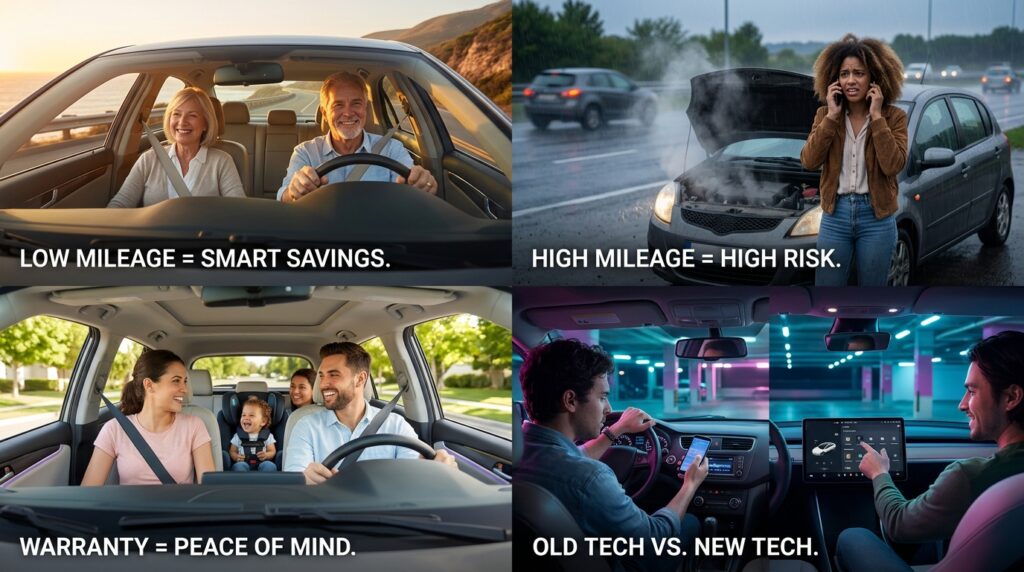
If you drive 20,000 miles a year, buying used is risky. You’ll hit the 100,000-mile mark (where expensive things tend to break) very quickly. In this case, a new car with a long warranty provides a safety net that used cars simply can’t match. Conversely, if you only drive 5,000 miles a year, a used car is a fantastic way to let someone else pay for the initial depreciation while you enjoy a nearly-new vehicle for a decade.
The “Peace of Mind” Factor
I’ve known people who get physically ill when a “Check Engine” light pops up. If you are one of those people, buy the new car. The premium you pay in the loan is essentially an “anxiety tax” that guarantees you won’t be stranded on the side of the road or stuck with a $2,000 transmission bill in the middle of a tight month.
Technology Cycles
We are living through a massive shift in how cars operate. A used car from even 2022 might feel ancient compared to the software-defined vehicles of 2026. If you care about seamless smartphone integration, over-the-air updates, and high-resolution displays, the used market might leave you feeling frustrated.
Dips and Tricks for the 2026 Market
-
The “Sweet Spot” is Year Three: If you are dead set on used, look for cars that are exactly three years old. This is when the majority of leases expire, flooding the market with well-maintained, lower-mileage vehicles.
-
Negotiate the Out-the-Door Price: Dealers love to talk about “monthly payments.” Don’t fall for it. Negotiate the total price of the car first, then talk about the loan.
-
Check Manufacturer Subsidies: Sometimes, a manufacturer is so desperate to sell a specific new model that the rebates and low APR make it cheaper than a two-year-old used version of the same car. Always check the “Current Offers” page on the brand’s website.
-
Pre-Approval is King: Go to your credit union or bank and get a loan offer before you walk into the dealership. This gives you a benchmark. If the dealer can’t beat your bank’s rate, walk away.
Is it Really Worth It? (The Verdict)
So, after looking at all the variables in our New vs Used Car Loan Cost Comparison (2026 Data), which one is actually “worth it”?
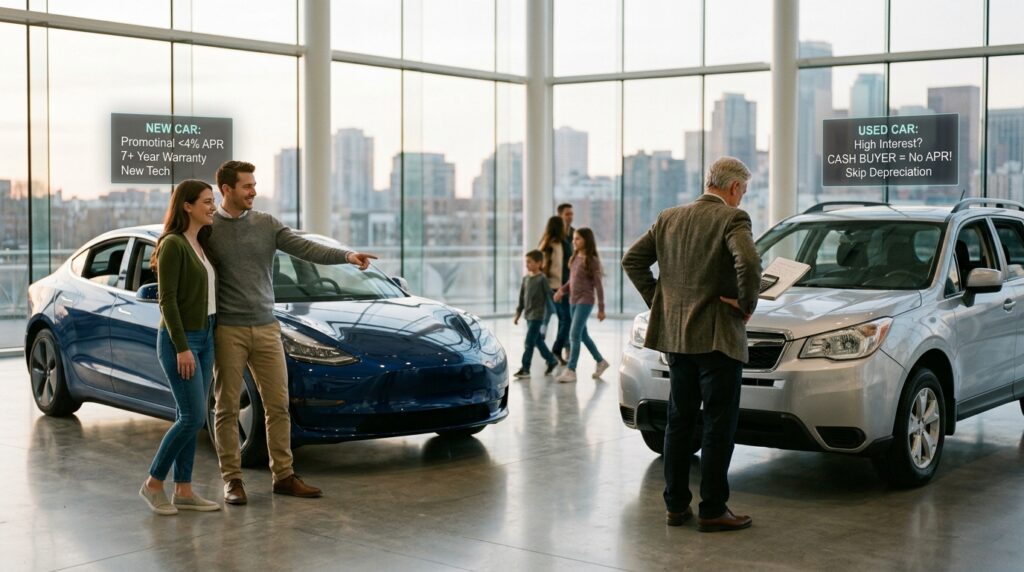
Buy New If: You plan to keep the car for 7+ years, you drive high mileage, you want the latest safety tech, and you can qualify for the manufacturer’s promotional APR (under 4%). In 2026, the gap between “new” and “slightly used” is thin enough that the warranty and lower interest often make “New” the smarter financial play for the long-term owner.
Buy Used If: You are a cash buyer or can put down a massive down payment (50%+). Avoiding the 2026 interest rates on used cars is the only way to make the used car math truly sing. If you can buy a 3-year-old car for cash, you skip the interest trap and let the previous owner eat the $12,000 depreciation.
Conclusion
At the end of the day, the right choice depends on your “Personal ROI.” For some, that return on investment is the lowest possible monthly payment to keep their budget breathing. For others, it’s the certainty that their car will start every single morning for the next five years without a hitch.
The 2026 data shows us that the market has become much more efficient. There are fewer “steals” in the used car lot, and new cars are no longer the financial disasters they were in the 1990s. Take the time to run your own simulation using your specific credit score and local insurance rates. Whether you choose the gleaming 2026 model or the seasoned 2023 veteran, as long as you understand the total cost of the loan, you’re already ahead of 90% of the people on the road. Drive safe, and keep your eyes on the numbers!